
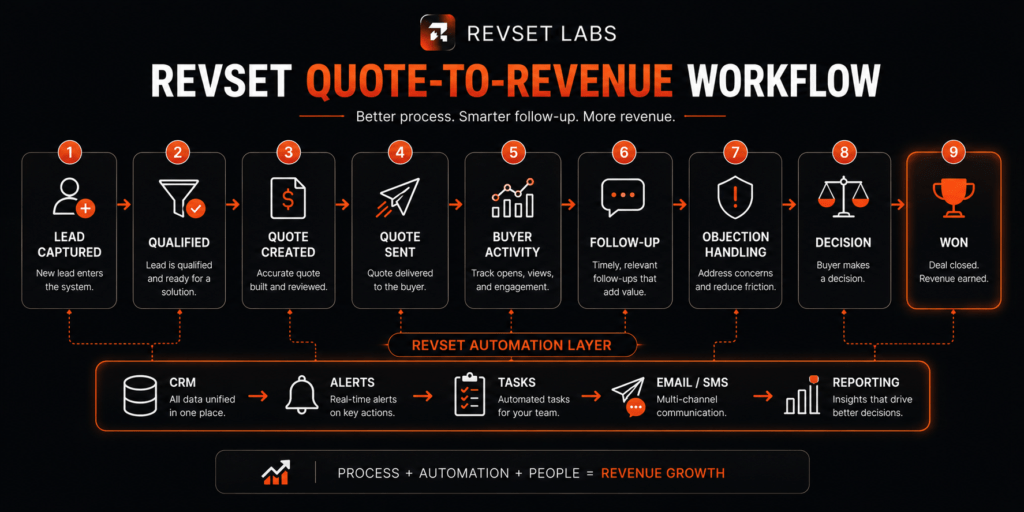
How to Follow Up With Unresponsive Leads
You answer a fresh inquiry promptly. You respond to the inquiries. You provide the details they asked for.
Then nothing occurs.
The lead ceases to react.
This is one of the customer journey’s most annoying aspects for sales teams. A lead could have completed a form, asked for a price, scheduled a call, inquired about cost, or demonstrated a definite interest in a service. The conversation abruptly stops.
It is easy to believe that the chance is gone.
However, rejection is not necessarily implied by silence.
The prospect could be preoccupied, comparing suppliers, awaiting approval, attending to another urgent matter, uncertain about the next course of action, or just overburdened by their email. Gong points out that purchasers may be balancing a number of objectives and advises following up instead of assuming that a delayed answer indicates a lack of interest.
Because of this, it takes more than just sending another “Just checking in” email to know how to follow up with unresponsive leads.
Finding out why the discussion halted and providing the prospective client with a straightforward reason to re-engage are the objectives.
RevSet Labs considers this to be a revenue process issue rather than just a persistent salesperson issue.
The query isn’t, “How many times have we contacted this lead?”
It is:
“What does this lead need to make the next decision?”
Why Do Leads Stop Responding?
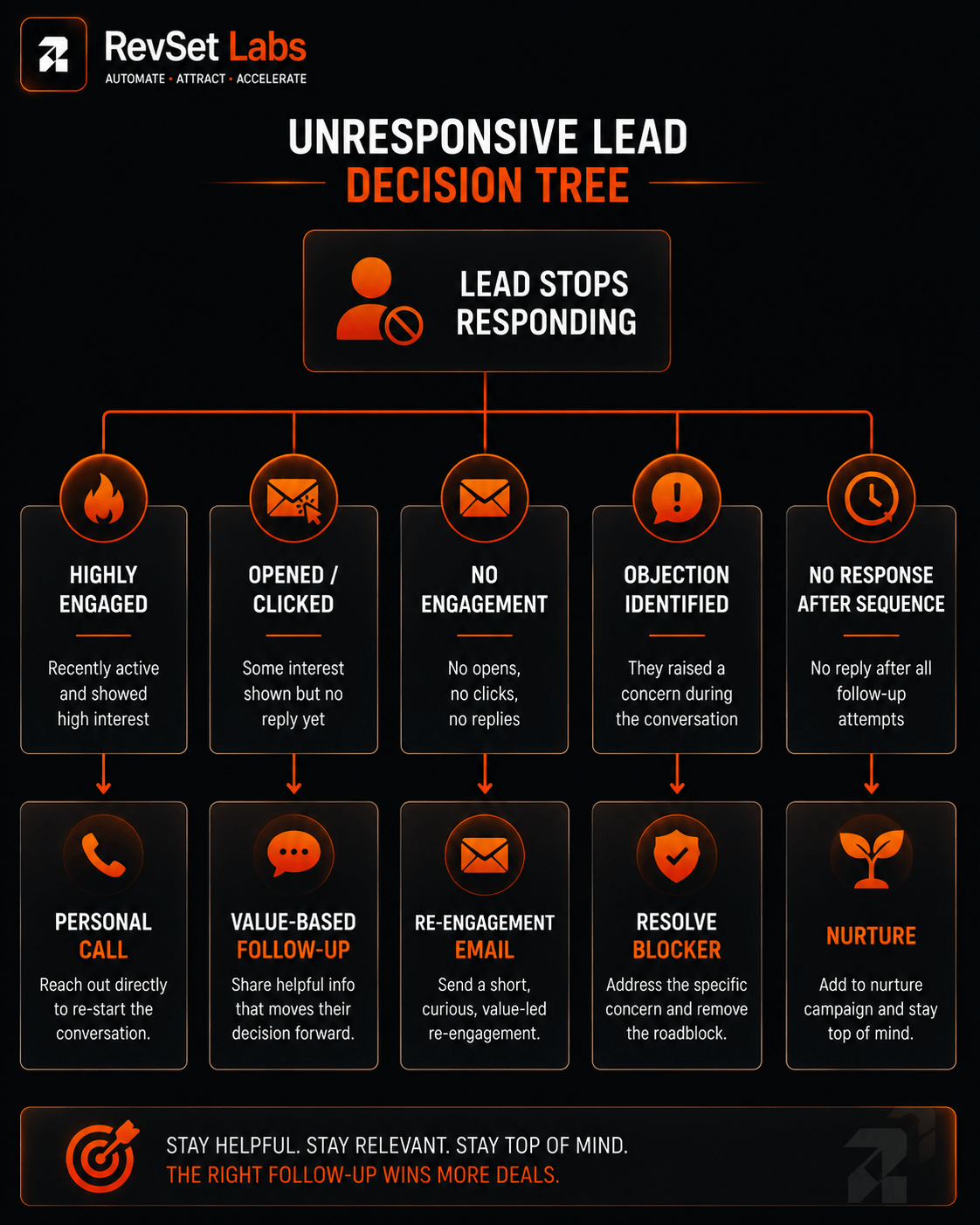
Before deciding how to follow up with unresponsive leads, identify what may be causing the silence.
There are several common reasons:
The timing changed
When a prospect originally contacted you, they could have been intrigued, but all of a sudden, another business necessity took precedence.
It’s not that their interest has vanished. The time has shifted.
The next step feels like too much work.
There may be conflict if a sales email requests a 30-minute meeting, comprehensive information, or a difficult choice.
Restarting the conversation is easier when the response is simpler.
The lead is comparing alternatives.
Before making a choice, prospective clients may consult with many providers.
They may be comparing cost, scope, service quality, availability, or anticipated outcomes if they remain silent.
The original message was not specific enough
Since a generic follow-up offers the possibility of nothing new, it may be simple to disregard.
“Just following up” doesn’t explain why they ought to reply right now.
In a similar vein, HubSpot advises against relying on repeated check-in messages in favor of adding context, offering value, and clearly outlining the next step.
The lead is intrigued yet unsure.
Occasionally, the buyer has an unasked inquiry.
They could be questioning:
- Does this fit into our budget?
- Does the service cover all of our needs?
- How soon are you able to begin?
- After we reach a consensus, what happens?
- Is it possible to modify the scope?
- Who else has to give their approval?
These hidden obstacles can be found with effective lead follow-up.
How to Follow Up With Unresponsive Leads Without Being Pushy
Making every communication about receiving a response is the worst error in a follow-up with an unresponsive lead.
Your potential customer is already aware that you are looking for a response.
They require an incentive to participate.
Rather than:
“Hello Sarah, just checking in to see if there have been any developments.”
Try:
Hello Sarah, I was considering the timescale you suggested for implementation. If the initial start date is no longer feasible, we can modify the suggested timetable. Would it make more sense to start later?
The prospect has something helpful to respond to in the second email.
This is a crucial differentiator in the RevSet Labs methodology:
Just because time has passed doesn’t mean you should follow up. There is something beneficial to proceed with, so follow up.
Common words like “never heard back” and “following up” might work against sellers since they draw emphasis on the seller’s effort rather than the buyer’s objectives, according to Gong’s research of over 304,000 follow-up prospecting emails.
Thus, your follow-up ought to be:
Relevant → Brief → Helpful → Easy to answer
When Should You Follow Up With an Unresponsive Lead?
For every business, there is no ideal time to follow up.
A lead contemplating a six-month consulting project should be treated differently from one who wanted an emergency service.
A sensible place to start for many common sales inquiries is:
| Timing | Purpose | Action |
| Day 0 | First response | Answer the enquiry and establish the next step |
| Day 1-2 | First follow-up | Confirm they received the information |
| Day 3-4 | Value follow-up | Add a useful resource, answer, or insight |
| Day 5-7 | Decision follow-up | Ask what is preventing progress |
| Day 10-14 | Re-engagement | Offer a simple alternative next step |
| Later | Nurture | Reconnect when there is a relevant reason |
The same pragmatic approach is used by RevSet Labs, which believes that follow-up scheduling should take into account buyer urgency, lead quality, sales complexity, and the most recent customer activity.
An old prospect who downloaded a guide six months ago shouldn’t be treated the same as a highly engaged lead who asked for pricing.
A Respectful Multi-Channel Re-Engagement Sequence
Quitting using email as the only means of communication is one of the most effective strategies to follow up with unresponsive leads.
Multi-channel communication does not, however, entail daily communication with everyone.
It entails carefully utilizing several channels, with each touch serving a distinct function.
Day 1 – Personalized Email
Start with a short email that connects to the original enquiry.
Example:
Subject: Quick question about [Service]
Hello [Name],
I wanted to make sure that the details I provided regarding [service/project] fit your requirements.
You said that [particular pain spot] was crucial. I may explain the suggested strategy or change the scope if it remains the top priority.
Would it be beneficial to go over that together?
Best,
[Name]
Because it reminds the lead of the initial context without making them feel bad for not responding, this is a useful follow-up email when there is no response.
Day 3 – Phone Call
Make a quick call if the lead is qualified and the phone number was given for business correspondence.
Avoid using the call as an opportunity to make an unexpected sales pitch.
Make use of the call to provide clarity.
For example:
“Hello [Name], this is [Name] from [Company]. You contacted us regarding [service]. I wanted to make sure you got everything you required. Are you still thinking about this?
Pay attention to whether they respond.
Instead of contacting them frequently, leave a brief voicemail if they don’t.
Day 5 – Value-Based Email
Now alter the reason for reaching out to them.
Provide something helpful:
- Pertinent case study
- Brief analogy
- Explanation of prices
- Schedule for implementation
- Typical error to avoid
- Helpful checklist
- Response to a probable objection
Personalized follow-up becomes more effective in this situation than recurring sales outreach.
Day 7 – SMS or WhatsApp
Only use a brief message when the channel is suitable, the lead has given consent, or they have otherwise lawfully chosen to communicate that way.
Example:
Hello [Name], this is [Your Name] from [Company]. I sent a brief message regarding [service]. I can respond to any inquiries or modify the next course of action if the project is still on your mind. Don’t hurry.
The tone is important.
Reopening the discussion is the goal, not applying pressure to the potential customer.
Day 10 – 14 Permission-Based Re-Engagement
If there is still no response, reduce the pressure.
Example:
Subject: Still relevant?
Hello [Name],
Since priorities are subject to change, I wanted to make sure that [project/service] is still something you’re thinking about.
It’s totally OK if the timing has altered. I can continue the chat if it is still pertinent and get back in touch when it makes sense.
Do you want to go on now or come back to this later?
Best,
[Name]
This eliminates the need for a meeting and provides the prospect with a simple response.
What Should You Say to an Unresponsive Lead?
A good follow-up email for unresponsive leads should usually contain four elements:
Context → Value → Easy Question → Clear Next Step
For example:
Hello [Name],
You stated throughout our conversation that the primary goal was to lessen [pain spot]. I wanted to provide a brief suggestion that could be useful.
Would a later time be preferable, or would it make sense to review this now?
Observe that there is no complaint about the quiet in the email.
It doesn’t state:
- “I have not received a response.”
- “I’m just bringing this up.”
- “Following up once more.”
- “Have you viewed my most recent email?”
- “Please answer.”
Instead of emphasizing the customer’s predicament, these sentences highlight the salesperson’s unaddressed message.
In particular, HubSpot suggests that follow-up communications provide recipients context and a cause to interact rather than starting with phrases like “I haven’t heard from you.”
Follow-Up Email Templates for Unresponsive Leads
Template 1: Simple Follow-Up
Subject: [Project] – quick question
Hi [Name],
I wanted to reconnect regarding [project/service].
You mentioned that [specific goal] was important. Is that still a priority?
If so, I can suggest the simplest next step.
Best,
[Name]
Template 2: Value-Based Follow-Up
Subject: One idea for [specific problem]
Hi [Name],
I came across something that reminded me of the [problem] you mentioned.
One approach that may help is [brief insight].
If this is still relevant, would you like me to send over a quick example?
Best
[Name]
Template 3: Timing Follow-Up
Subject: Timing for [project]
Hi [Name],
I know priorities can shift.
Is [project/service] still something you’re planning to address, or has the timing moved?
Either answer is completely fine. I just want to make sure I follow up at the right time.
Best,
[Name]
These follow-up email examples work because they give the prospect an easy response. The goal is not always to book a meeting immediately.
Sometimes the first objective is simply to confirm interest.
When You Should Stop Following Up
Just as crucial as understanding how to follow up with unresponsive leads is knowing when to quit.
When the message, time, or value remain unchanged, persistence turns into pressure.
Eventually, a lead ought to transition into a nurture path when:
- Many careful attempts go unanswered.
- The first project is no longer underway.
- The lead specifically requests not to be bothered.
- Contact details are not correct.
- Outreach is no longer justified from a business standpoint.
- Over a lengthy period of time, your CRM indicates no significant involvement.
This does not imply that the chance will always be lost.
When anything pertinent changes later on, a qualified prospect may be re-engaged.
Reconnecting might be justified by a new service, industry advancement, seasonal demand, business announcement, or helpful resource.
Salesforce’s cadence guideline encourages organized, repeatable outreach actions instead of depending on personal recollection to determine when to engage stale opportunities.
Build Follow-Up Around Lead Behavior
At this point, following up with unresponsive prospects turns into a revenue operations problem.
Consider two leads:
Lead A: Clicked the proposal, opened your email three times, and went to your price website.
Lead B: For 10 days, no message has been opened.
The same follow-up shouldn’t be given to them.
Given the indications of buyer interest, Lead A could merit a prompt personal call.
Lead B could require eventual nurturing, a fresh subject line, or a lighter re-engagement message.
Email activity and other engagement signals may be used by modern sales systems to assist in determining the timing and tailoring of follow-up messages. For instance, Gong explains how to customize follow-up choices based on email openings and clicks.
Avoiding automating every human encounter is crucial.
The purpose is to ensure that the sales team is aware of what transpired, what ought to happen next, and who is responsible for the subsequent action.
A Better Way to Manage Sales Follow-Up
Unresponsive leads, in RevSet Lab’s opinion, are frequently a sign of a more serious operational issue.
If a salesman has to keep in mind:
- Which leads require more investigation?
- The last time each lead was contacted?
- What was spoken about?
- Whether the message was opened by the lead?
- Which objection was brought up?
- Which channel was utilized?
- What needs to occur next?
Then the procedure already relies too much on memory.
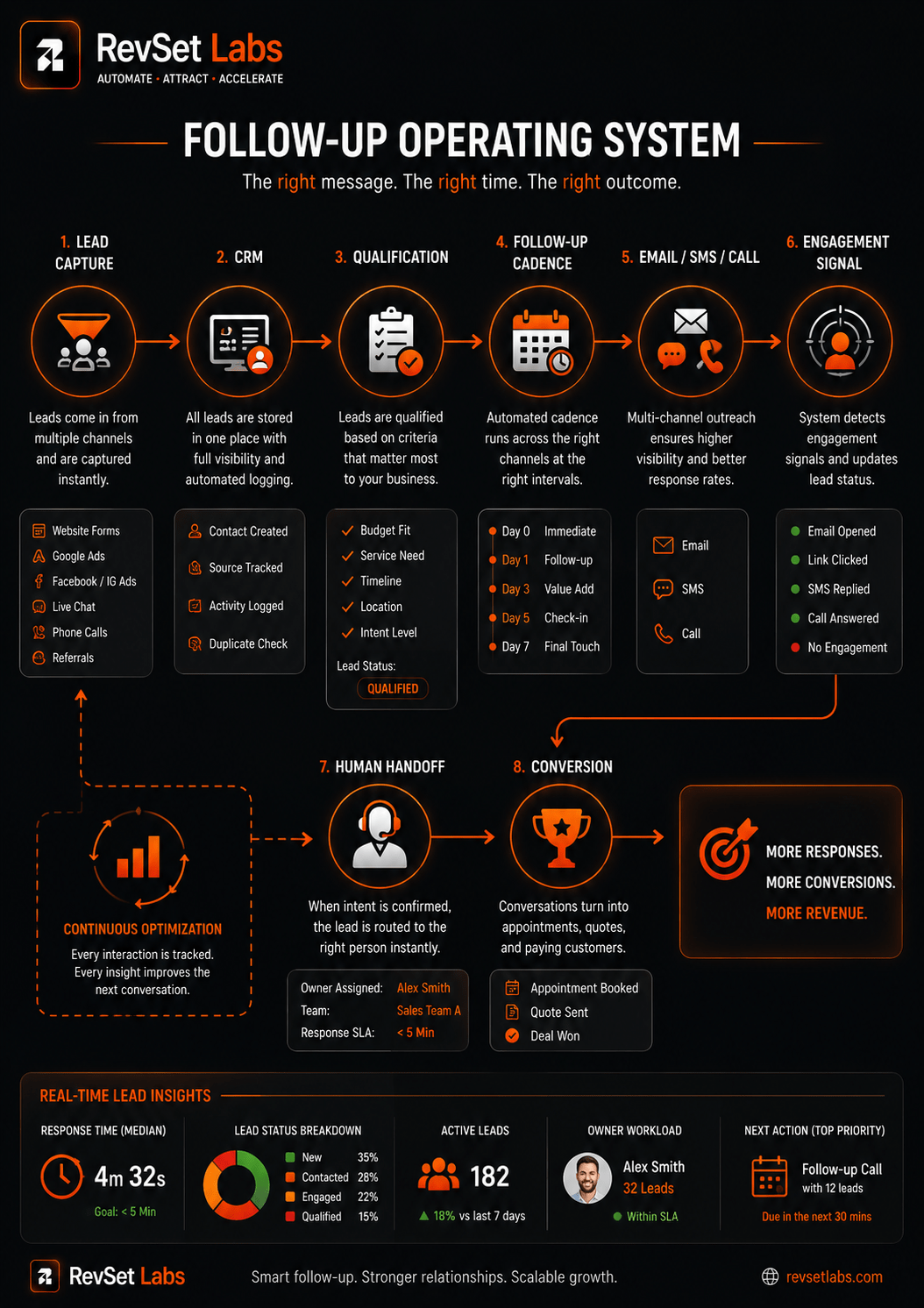
A better system connects:
Lead → CRM → Qualification → Sales Outreach → Follow-Up Sequence → Engagement → Human Handoff → Conversion
The context should be stored in the CRM.
Repetitive tasks and suitable reminders should be handled via automation.
Judgment, objections, negotiation, and meaningful interactions should all be handled by salespeople.
This is the balance RevSet Labs focuses on.
Consistency is produced via automation. Context is created by humans.
How Many Times Should You Follow Up With an Unresponsive Lead?
No universal number exists.
Building a defined follow-up cadence based on lead quality, urgency, purchase stage, and prior interaction is a superior strategy.
It could be fair to make repeated, well-spaced attempts through various channels for a new, high-intent inquiry.
Fewer touches followed by nurturing could be more suitable for an elderly, low-intent lead.
What matters is that each touch has a purpose.
A helpful order is:
Respond → Remind → Add Value → Ask → Re-engage → Nurture
Not
Email → Email → Email → Email → “Just checking in”
Gong’s research, following up with prospects who haven’t reacted, may significantly increase results when compared to just giving up on the opportunity, highlighting the need for organized follow-up.
The RevSet Labs Approach to Unresponsive Leads
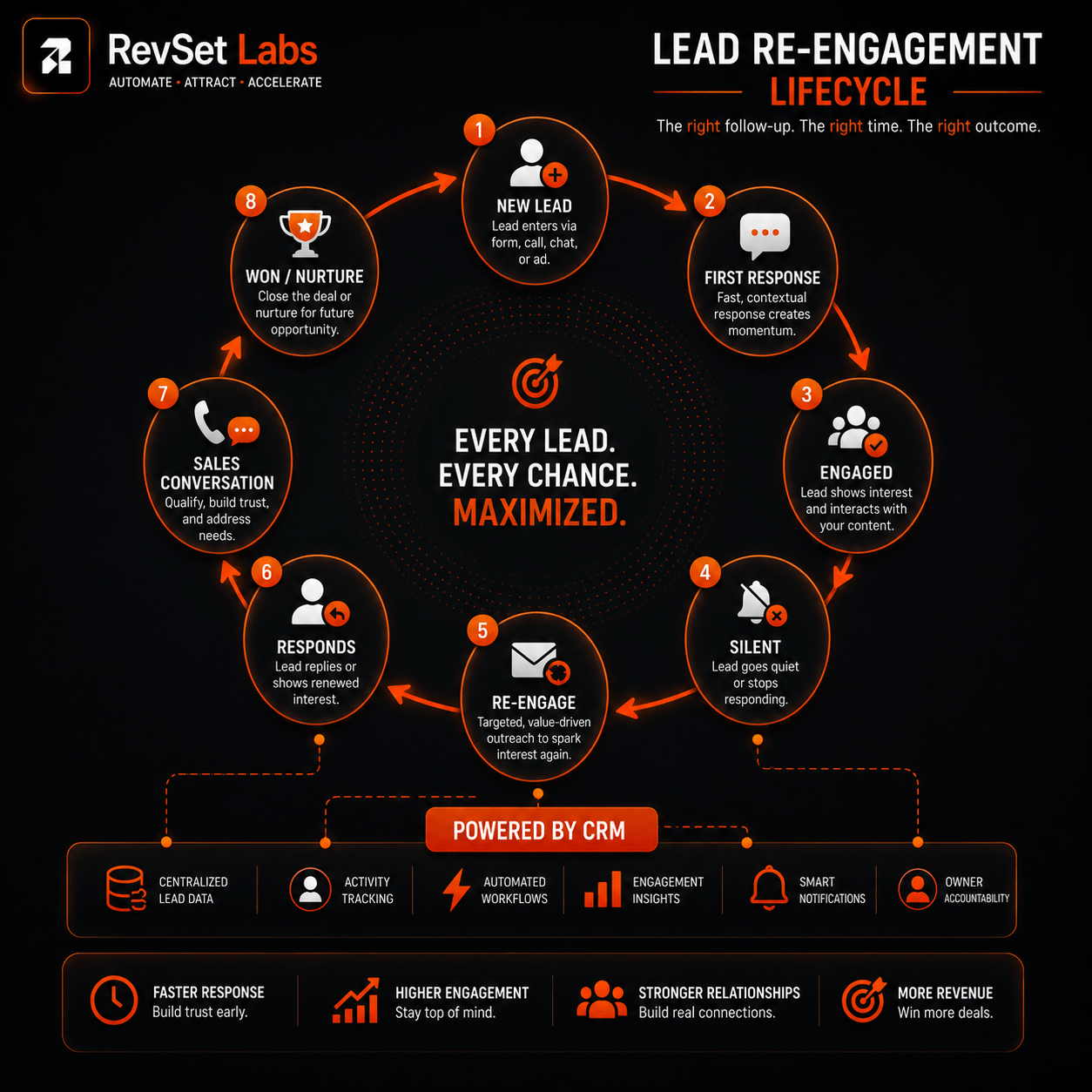
Lead re-engagement is viewed by RevSet Labs as a component of the whole revenue journey.
Building an aggressive follow-up system that bombards prospects with communications is not the goal.
The goal is to develop a system that understands when to:
- React promptly.
- Carefully follow up.
- When behavior shifts, alter the message.
- Give a person significant opportunity.
- When the buyer requires space, pause.
- When the time is off, nurture.
Both sides of the sales discussion are safeguarded by this strategy.
A more dependable sales funnel is provided to your team.
A superior customer experience is provided to your prospects.
Additionally, quality leads are less likely to vanish just because a follow-up was neglected.
Final Thoughts
Being more persistent only for the sake of persistence is not the goal of learning how to follow up with unresponsive leads.
The goal is to become more pertinent.
A quiet possibility could require further details. They can require some time. They could object. Their priorities could have shifted. Alternatively, they could have overlooked your initial communication.
Guessing is not your job.
You should be able to determine what is going on with the aid of your follow-up procedure.
Let’s start with the context. Add worth. Make the answer simple. Respectfully use a variety of channels. Keep an eye on consumer behavior. Recognize when to move the opportunity into nurturing and when to include a salesman.
Above all, avoid relying solely on someone’s recollection for follow-up.
RevSet Labs believes a robust revenue system should integrate lead acquisition, CRM activity, sales outreach, follow-up scheduling, automation, human interactions, and reporting into a single, cohesive process.
More leads might not be the solution if your team is producing leads, but too many prospective clients leave after the initial chat.
It could be a more effective way to follow up with unresponsive leads.
Identify the areas where your follow-up strategy is faltering and close the gap to turn silent prospects into organized chances.
FAQs
How do you follow up with an unresponsive lead?
Examine the initial exchange before sending a brief, tailored message related to the lead’s particular requirement. Instead of just requesting an update, provide value and pose a question that is simple to respond to.
How do you follow up with a lead who isn’t responding?
Make use of a spaced follow-up sequence that might involve phone calls, emails, and suitable communications channels. If there is no interaction, change the purpose of each touch and finally transfer the lead into nurturing.
How do you follow up after no response?
Give a suitable length of time, respect the original context, say something helpful, and suggest a straightforward next course of action. Steer clear of words that make the prospect feel bad about not responding.
How many times should you follow up with an unresponsive lead?
A set number does not exist. Urgency, lead quality, purchasing stage, engagement, and sales cycle all influence the appropriate cadence. Generally speaking, a few deliberate attempts are more beneficial than frequent generic messaging.
How long should you wait before following up with a lead?
One to three business days might be a reasonable starting point for many common inquiries. Adapt the time to the customer’s urgency and any schedule that was decided upon during the first discussion.
What should you say to an unresponsive lead?
Briefly reiterate the initial requirement, offer pertinent details, and pose a straightforward query. “Is solving [specific problem] still a priority, or would a later time make more sense?” is one example.
What is the best follow-up email for an unresponsive lead?
The ideal message is tailored to the lead and provides an incentive for them to reply. Generally speaking, a brief email that delivers context, value, and a simple next step will be more effective than a generic “just checking in” email.
Should you use multiple channels to follow up with prospects?
Yes, assuming that the channels are suitable and the prospect has given permission to use them. Reconnecting by phone, email, and authorized messaging can increase the number of possibilities to do so without depending just on one mailbox.
Re-Engage More Leads Without Chasing Them
Too many leads going silent after the first conversation can be a sign of a follow-up process that relies too heavily on manual reminders.
RevSet Labs helps businesses build revenue systems that connect lead capture, CRM tracking, automated follow-up, lead re-engagement, routing, and human handoff so qualified opportunities don’t get forgotten.
Find out where your leads are going quiet. RevSet Labs Revenue Leak Scorecard to identify the follow-up gaps costing your business opportunities.